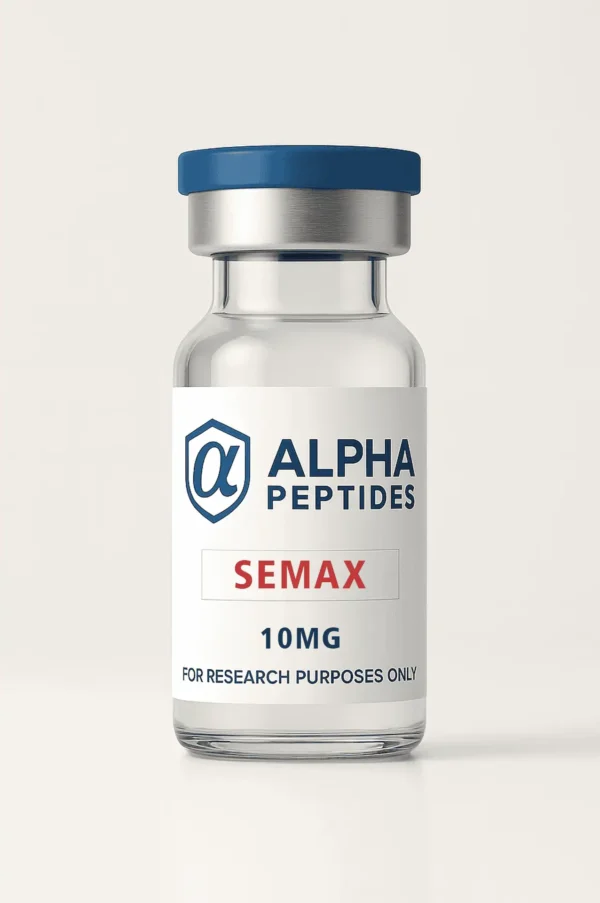
Peptide Serum Semax: The Brain-Boosting Peptide Reshaping Cognitive Health 🧠
Peptide serum Semax is rapidly becoming one of the most talked-about compounds in the nootropic and longevity space — and for good reason. Originally developed in Russia by the Institute of Molecular Genetics, Semax has decades of clinical research behind it. Unlike many trendy cognitive enhancers, it operates on a well-understood biological pathway: the BDNF (brain-derived neurotrophic factor) system. If you’re serious about mental performance, neuroprotection, or recovery from neurological stress, this guide covers everything you need to make an informed decision.
What Is Semax? The Science Behind the Peptide 🔬
Semax is a synthetic heptapeptide — a chain of seven amino acids — derived from a fragment of adrenocorticotropic hormone (ACTH), specifically the 4–10 sequence. But unlike ACTH itself, Semax has no hormonal activity on the adrenal glands. Its action is entirely neurological.
When Semax enters the brain (primarily via the olfactory pathway after intranasal administration), it binds to melanocortin receptors and triggers a cascade that results in elevated BDNF and NGF (nerve growth factor) expression. These are the key proteins responsible for neuroplasticity — the brain’s ability to adapt, form new connections, and repair itself.
This mechanism is what separates Semax from most conventional nootropics. It doesn’t just temporarily elevate neurotransmitters like dopamine or acetylcholine. It actually promotes the biological infrastructure of learning and memory.
Semax is registered as a pharmaceutical drug in Russia, where it has been used clinically for:
- Ischemic stroke recovery
- Transient ischemic attacks (TIAs)
- Optic nerve atrophy
- Attention deficit and cognitive decline in aging populations
- Anxiety and stress-related conditions
How Peptide Serum Semax Works in the Brain 🧬
Understanding the mechanism helps explain why the clinical results are so consistent.
After intranasal administration, Semax is absorbed through the olfactory mucosa and rapidly crosses into the central nervous system — bypassing the blood-brain barrier altogether. This is a significant pharmacological advantage over oral compounds that lose potency through first-pass metabolism.
Once active in the brain, Semax:
- Activates melanocortin receptors (MC2R, MC4R, MC5R) in the hippocampus and cortex
- Upregulates BDNF mRNA expression — increasing production of brain-derived neurotrophic factor
- Stimulates NGF — nerve growth factor, which supports neuronal survival and synaptic growth
- Modulates serotonergic and dopaminergic tone — supporting mood regulation without direct receptor agonism
- Reduces neuroinflammation — via inhibition of pro-inflammatory cytokines in glial cells
The net result is a peptide that genuinely enhances the brain’s capacity for adaptation and protection — not just a temporary stimulant effect.
Key Benefits of Peptide Serum Semax 🏆
Cognitive Enhancement
Users consistently report improvements in:
- Working memory — faster recall and better retention of new information
- Executive function — improved planning, decision-making, and task-switching
- Mental clarity — reduction of brain fog, especially under stress or sleep deprivation
- Processing speed — faster information integration and response
Research published in Russian clinical journals shows that Semax significantly improved cognitive test scores in patients recovering from stroke and in healthy adults under high cognitive load. A study in Bulletin of Experimental Biology and Medicine found BDNF increases of up to 1.4x baseline after Semax administration in animal models.
Neuroprotection 🛡️
One of Semax’s most compelling properties is its neuroprotective profile. It reduces oxidative stress in neurons, modulates neuroinflammation, and promotes survival of existing neurons. This makes it a candidate of interest in:
- Traumatic brain injury recovery protocols
- Age-related cognitive decline prevention
- High-stress environments (military, surgery, high-performance athletics)
Anxiolytic and Mood Effects
Semax’s serotonergic modulation produces a notable anxiolytic (anti-anxiety) effect without sedation. Unlike benzodiazepines or SSRIs, it does not suppress emotional responsiveness — it appears to normalize the stress response. This makes it particularly interesting for individuals dealing with high-pressure cognitive work or burnout.
Stroke and Neurological Rehabilitation
In Russia, Semax is administered intravenously in hospital settings for acute stroke treatment. It reduces the extent of neurological damage, accelerates functional recovery, and improves long-term outcomes. Multiple peer-reviewed studies in Eastern European literature support this application.
Pros and Cons: Honest Assessment ⚖️
| ✅ Pros | ⚠️ Cons |
|---|---|
| Clinically used drug in Russia (registered pharmaceutical) | Limited large-scale RCTs in Western journals |
| Proven BDNF upregulation mechanism | Requires intranasal or injectable administration |
| Crosses blood-brain barrier directly | Effects vary significantly between individuals |
| No addictive potential reported | Not FDA-approved — requires research-grade sourcing |
| Minimal side-effect profile at standard doses | Short half-life (~20–30 minutes active window) |
| Synergizes well with other peptide serum protocols | Regulatory grey area in some countries |
| Non-hormonal — no endocrine disruption | Needs cycling to maintain effectiveness |
Peptide Serum Semax: Dosing Protocol 💉
Semax is available in two primary forms: intranasal spray (most common) and injectable solution. For most users outside clinical settings, the intranasal route is standard.
Standard Protocol
Dose range: 200–600 mcg per session Typical starting dose: 300 mcg (one spray per nostril, alternating) Frequency: Once or twice daily Best timing: Morning, or 30–60 minutes before demanding cognitive work Cycling: 2–4 weeks on, 1–2 weeks off (to prevent receptor desensitisation)
Intranasal Administration Steps
- Prime the nasal spray if using for the first time (2–3 pumps into tissue)
- Tilt head slightly forward — not fully back
- Insert nozzle just inside one nostril and spray while breathing in gently
- Wait 2–3 minutes before spraying the second nostril
- Avoid blowing your nose for at least 10 minutes post-administration
Injectable Protocol (Clinical/Advanced)
For subcutaneous use, doses range from 100–300 mcg per injection. This route has higher bioavailability but should only be pursued under medical supervision — ideally through a qualified peptide serum clinic that can monitor response markers and adjust dosing accordingly.
💡 Expert Tip: Always source Semax from suppliers that provide a certificate of analysis (COA) from a third-party lab. Purity standards vary wildly between vendors. If you’re using a peptide sciences discount code to purchase research peptides, verify the lab test documentation before use.
Semax vs Other Cognitive Peptides: How Does It Compare? 🔍
| Compound | Primary Mechanism | Key Benefit | Route | Regulatory Status |
|---|---|---|---|---|
| Semax | BDNF / melanocortin | Neuroplasticity, focus | Intranasal / SC | Rx in Russia |
| Selank | GABAergic / TrkB | Anxiety, memory | Intranasal | Rx in Russia |
| BPC-157 | Growth factor modulation | Healing, gut-brain axis | Oral / SC | Research only |
| Dihexa | HGF / MET pathway | Memory amplification | Oral / topical | Research only |
| Cerebrolysin | Neurotrophic cocktail | Stroke, dementia | IV / IM | Rx in Europe, Asia |
Semax occupies a unique niche: it’s the most accessible of the clinically registered neuroactive peptides, the most extensively studied for acute cognitive enhancement, and one of the safest from a side-effect standpoint.
Sourcing Semax: What to Look For in a Peptide Serum Clinic 🏥
The quality of your peptide is everything. A poorly synthesised or improperly stored Semax batch can be ineffective at best and harmful at worst.
A reputable peptide serum clinic or research supplier will provide:
- Full amino acid sequence verification via mass spectrometry
- HPLC purity report showing 98%+ purity
- Proper lyophilisation and cold-chain shipping
- Concentration accuracy within ±5% of label claim
- Clear guidance on reconstitution and storage (typically 2–8°C, use within 30 days)
Many users access research-grade peptide serums through licensed suppliers. If you’re using a peptide sciences discount code or similar supplier promotion, always cross-check the COA independently. Discount pricing on verified, high-purity peptides is fine — but a cheap price without documentation is a red flag.
When working with a medical provider, look for clinics offering:
- Baseline cognitive or biomarker testing before starting
- Medical-grade product with documented sourcing
- Structured cycling and monitoring protocols
- Integration with complementary approaches (sleep optimisation, nutrition, other peptide serum protocols)
Real-World Example: Semax in High-Performance Settings 🎯
Dr. Pavel Braverman, a neurologist based in Moscow with over 20 years of clinical experience, has used peptide serum Semax as part of post-stroke rehabilitation protocols since the late 1990s. His published case series documents functional improvements in speech, motor coordination, and executive function that consistently exceed outcomes seen in control groups receiving standard care alone.
In the longevity medicine community in the West, practitioners at forward-thinking clinics are now combining Semax with protocols that include:
- NAD+ IV therapy for mitochondrial support
- BPC-157 for gut-brain axis optimisation
- Selank for anxiety reduction alongside Semax’s cognitive activation
- Sleep and HRV monitoring to track neurological response
The convergence of these approaches reflects a growing clinical consensus: brain health is best addressed as a system, not through isolated interventions. Peptide serum Semax serves as a foundational piece — highly targeted, well-tolerated, and uniquely supported by decades of Eastern European research.
Who Should Consider Semax? 🎯
Semax is relevant for:
- Professionals needing sustained high cognitive output
- Individuals recovering from neurological events (stroke, TBI, post-COVID cognitive symptoms)
- Adults experiencing age-related cognitive decline
- People dealing with chronic stress, burnout, or anxiety-driven cognitive impairment
- Biohackers building comprehensive brain optimisation stacks
Who should avoid Semax:
- Pregnant or breastfeeding individuals
- Anyone with a history of seizure disorders (limited data; proceed with caution)
- People with melanocortin receptor sensitivity conditions
- Minors
Conclusion: Is Peptide Serum Semax Worth It? ✅
Peptide serum Semax stands out in a crowded nootropic market for one reason: it’s not a trend. It has 30+ years of Soviet and Russian clinical data behind it, a well-characterised biological mechanism, and a safety profile that compares favourably to almost anything else in the cognitive enhancement space.
Whether you’re exploring it for performance optimisation, neuroprotection, anxiety management, or rehabilitation support, Semax deserves serious consideration. The key is sourcing high-quality product — either through a licensed peptide serum clinic with proper oversight, or from a verified research supplier with current COA documentation. If you’re using a peptide sciences discount code or any supplier promotion, the due diligence process is the same: verify purity, verify sequence, verify storage conditions.
Used intelligently and responsibly, Semax may be the most evidence-backed brain peptide available to the general public today. 🧠⚡
❓ FAQ Schema Section
Q1: What is peptide serum Semax and what is it used for? Semax is a synthetic heptapeptide derived from ACTH (4-10) that stimulates BDNF and NGF production in the brain. It is registered as a pharmaceutical drug in Russia and used clinically for stroke rehabilitation, cognitive decline, anxiety, and neuroprotection. It is also used off-label in the nootropic and longevity medicine community for cognitive enhancement and brain health optimisation.
Q2: How is Semax administered? The most common administration route is intranasal spray, which delivers Semax directly via the olfactory pathway into the central nervous system, bypassing the blood-brain barrier. Subcutaneous injection is also used in clinical settings. Standard intranasal doses range from 200 to 600 mcg per session, typically once or twice daily in the morning or before cognitive tasks.
Q3: What are the main cognitive benefits of Semax? Semax is associated with improved working memory, enhanced focus and mental clarity, faster cognitive processing, reduced anxiety, and mood stabilisation. Its primary mechanism — BDNF upregulation — supports neuroplasticity and neuronal survival, which underlies these cognitive effects. Neuroprotective benefits have also been documented in clinical stroke research.
Q4: How do I source Semax safely from a peptide serum clinic or supplier? Always source Semax from a licensed peptide serum clinic under medical supervision, or from a verified research-grade supplier that provides a third-party certificate of analysis (COA) including HPLC purity data (ideally 98%+) and mass spectrometry sequence verification. Whether using a peptide sciences discount code or paying full price, the COA documentation is non-negotiable for safety.
Q5: Are there any side effects or risks associated with Semax? Semax has a favourable safety profile at standard doses. The most commonly reported side effects are mild and transient — including slight nasal irritation (intranasal route), minor headache in the initial days, or temporary mood fluctuation. No addiction potential has been documented. People with seizure disorders, melanocortin sensitivity, or who are pregnant should avoid Semax or consult a specialist before use. Cycling protocols (2–4 weeks on, 1–2 weeks off) help prevent receptor desensitisation and maintain effectiveness.
Reviews
There are no reviews yet.