Peptide Serum Sterile Water: The Complete Expert Guide 💉
If you’re using peptide serum sterile water for the first time, the difference between results and disappointment comes down almost entirely to how you handle the reconstitution step. Peptides are delicate bioactive molecules — and sterile water is not just a carrier, it’s a critical part of the formula. Used correctly, peptide serum sterile water preparations can deliver remarkable outcomes in skin quality, cellular repair, and performance optimization. Used carelessly, they degrade fast and underperform.
This guide covers everything you need — from the science of why sterile water matters, to clinical reconstitution protocols, storage rules, and how leading products like rhode peptide lip treatment and apex peptides approach peptide delivery differently.
What Is Peptide Serum Sterile Water and Why Does It Matter?
Peptides are short chains of amino acids — the building blocks of proteins like collagen, elastin, and growth hormone. In their raw powdered form, most research-grade peptides are fragile and cannot be absorbed effectively. To become bioavailable, they must be dissolved into a compatible solution.
That’s where peptide serum sterile water comes in.
Sterile water is free of microorganisms, pyrogens, and particulate matter. When you combine it with a lyophilized (freeze-dried) peptide powder, you create a stable solution ready for topical application or, in clinical settings, subcutaneous injection. The purity of the water directly affects the stability of the peptide — even trace contaminants can cause degradation, clumping, or immune reactions.
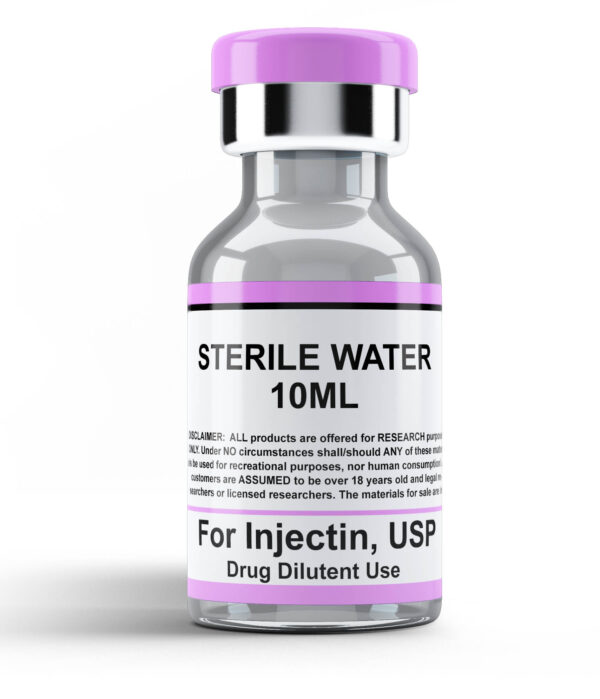
Bacteriostatic water — sterile water containing 0.9% benzyl alcohol — is often preferred over plain sterile water for injectable peptide preparations. The benzyl alcohol acts as a preservative, giving the reconstituted vial a longer stable window of around 28–30 days when refrigerated properly.
🔬 Expert Note: Bacteriostatic water is not the same as sterile water for injection. Plain sterile water is single-use. Bacteriostatic water allows multi-draw use. Always match the water type to your specific protocol.
How to Reconstitute Peptide Serum Sterile Water Correctly
Reconstitution is the process of dissolving the peptide powder with sterile water to create your working solution. Getting this right is non-negotiable — improper technique is the single most common cause of degraded or ineffective peptide preparations.
Step-by-Step Reconstitution Protocol
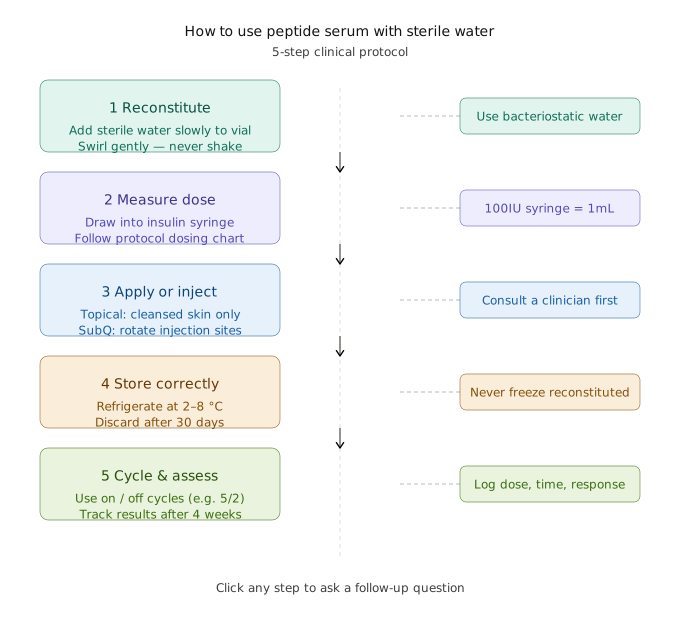
- Wipe both vial tops (peptide and water) with an alcohol swab. Wait 30 seconds for it to dry before drawing or injecting anything.
- Draw the required volume of sterile or bacteriostatic water into an insulin syringe. A standard 100IU syringe holds 1mL — this is your baseline for dilution calculations.
- Insert the needle into the peptide vial at an angle and allow the water to run down the inside wall of the vial. Never jet it directly onto the powder — this causes denaturation.
- Swirl the vial gently between your fingers until the powder is fully dissolved. The solution should become clear. If it remains cloudy or shows particles, do not use it.
- Never shake the vial. Shaking introduces air bubbles and mechanical stress that can break peptide bonds.
Peptide Serum Clinic Protocols vs. At-Home Use
A peptide serum clinic environment differs from home use in three fundamental ways: sterility controls, dosing precision, and monitoring. Understanding this gap helps you calibrate your own approach — and know when professional guidance is essential.
What a Peptide Serum Clinic Does Differently
- Uses laminar flow hoods or sterile compounding environments
- Prepares formulations under pharmaceutical-grade conditions
- Confirms peptide purity via third-party certificates of analysis (CoA)
- Matches peptide sequences to specific patient outcomes (skin, recovery, hormonal support)
- Provides structured cycling schedules with follow-up assessments
At home, you can replicate several of these principles. Source peptides only from suppliers who publish independent CoA documentation. Maintain a clean, dedicated workspace. Use fresh alcohol swabs for every draw. Track your doses and responses systematically.
💡 Expert Recommendation: If you’re using peptides for anything beyond topical skincare — including subcutaneous administration for recovery or hormonal support — consult a licensed practitioner affiliated with a reputable peptide serum clinic before starting. Self-dosing injectable peptides without medical oversight carries real risk.
Peptide Serum Benefits, Pros & Cons
Key Benefits of Peptide Serum
- Collagen stimulation: Signal peptides like Matrixyl (palmitoyl pentapeptide-4) directly upregulate collagen and elastin synthesis in dermal fibroblasts.
- Barrier reinforcement: Copper peptides enhance skin repair, wound healing, and transepidermal water retention.
- Cellular signalling: Growth factor peptides (GHK-Cu, BPC-157) influence tissue repair at a systemic level.
- Precision targeting: Unlike broad retinoids or exfoliants, peptides can be selected for very specific outcomes — fine lines, barrier recovery, hyperpigmentation.
- Compatibility: Most peptides are well-tolerated across skin types, including sensitive and reactive skin, when properly formulated.
Pros
- High target specificity — works on defined pathways
- Well-tolerated with minimal irritation risk
- Can be layered with other actives (hyaluronic acid, niacinamide)
- Clinical evidence base is growing rapidly
- Both topical and injectable forms available depending on application
Cons
- Stability is fragile — improper storage rapidly degrades activity
- Quality varies enormously between suppliers
- Injectable forms require medical oversight
- Results are gradual — expect 4–12 weeks for measurable changes
- Cost per effective dose can be high for research-grade sources
Rhode Peptide Lip Treatment vs. Sterile Water Peptide Preparations
These two approaches sit at very different ends of the peptide delivery spectrum — and it’s worth understanding why both are legitimate in their own context.
The rhode peptide lip treatment is a cosmetic-grade topical product. It uses encapsulated peptide technology within a moisturizing base, designed to plump, condition, and support lip barrier function. No reconstitution is required. The peptides are pre-stabilized in the formula. It’s accessible, low-risk, and designed for daily consumer use.
Peptide serum sterile water preparations are a different category entirely. These are typically lyophilized research or pharmaceutical-grade peptides that must be reconstituted by the user. The active concentrations are often significantly higher than cosmetic-grade products. The mechanisms can extend beyond skin surface — some preparations target systemic repair pathways.
Neither is “better” in the abstract. The rhode peptide lip treatment excels for daily cosmetic maintenance. Clinical-grade peptide serum preparations are appropriate when higher bioavailability and more targeted outcomes are the goal.
Apex Peptides and Third-Party Quality Standards
When sourcing materials for peptide serum sterile water preparation, supplier quality is everything. Apex Peptides is one example of a supplier operating in the research peptide space — publishing CoA documentation for purity, HPLC testing data, and mass spectrometry confirmation for each batch.
What to look for in any peptide supplier:
- Certificate of Analysis (CoA) from an independent third-party laboratory
- HPLC purity rating of 98%+ for research-grade preparations
- Mass spectrometry confirmation of the correct molecular weight
- Batch-specific documentation — not generic, not recycled between lots
- Transparent sourcing and manufacturing disclosure
Suppliers like Apex Peptides that publish full batch documentation represent a meaningfully different risk profile than unverified sources. The difference in outcome between a 95% pure and a 98%+ pure peptide preparation — especially in an injectable context — is clinically significant.
⚠️ Safety Note: Research peptides are sold for research purposes. If you are considering any form of self-administration beyond topical skincare, consult a licensed medical professional first. This guide is informational only and does not constitute medical advice.
Storage Rules for Reconstituted Peptide Serum Sterile Water
Once your peptide serum sterile water solution is prepared, the clock starts immediately. These storage rules are non-negotiable:
- Refrigerate at 2–8°C within 30 minutes of reconstitution
- Never freeze a reconstituted solution — ice crystal formation damages peptide structures
- Discard after 28–30 days regardless of remaining volume
- Keep away from light — UV exposure degrades many peptide sequences
- Label every vial with the reconstitution date and the concentration
- Use lyophilized (dry) peptides from the freezer if you need long-term storage — reconstitute only what you’ll use within the discard window
Expert Opinion — Real-World Results From Peptide Serum Protocols
In clinical aesthetic practice, peptide-based protocols have demonstrated measurable improvements in skin density, hydration, and surface texture when applied consistently over 8–12 week cycles. Practitioners working with research-grade peptide preparations report that the reconstitution quality — specifically the choice of sterile water type and mixing technique — is one of the most frequently overlooked variables in suboptimal outcomes.
A common real-world pattern: a client presents with inconsistent results from a self-managed peptide program. On review, the vials were shaken rather than swirled, the water used was plain sterile for injection rather than bacteriostatic, and the storage temperature was poorly controlled. Correcting these three factors alone — without changing the peptide or the dose — produced significantly improved outcomes over the following 6 weeks.
The lesson is consistent: peptide serum sterile water preparation is a technical process, not an intuitive one. Respecting the protocol produces results. Cutting corners does not.
Conclusion: Getting the Most From Peptide Serum Sterile Water
The science behind peptides is compelling — and the clinical results, when protocols are followed correctly, back it up. But the quality of your outcome depends almost entirely on the quality of your process. From reconstituting your peptide serum sterile water correctly to sourcing from verified suppliers like apex peptides, maintaining proper cold-chain storage, and consulting a peptide serum clinic for anything beyond cosmetic topical use — every step matters.
Whether you’re exploring skin-focused options like rhode peptide lip treatment at one end of the spectrum, or building a structured research protocol using clinical-grade peptide serum sterile water at the other, the foundational principle is the same: precision and consistency produce results. 💧✨
❓ FAQ — Schema Ready
Q1: What type of sterile water should I use to reconstitute a peptide serum? For multi-use vials intended for subcutaneous injection, bacteriostatic water (sterile water with 0.9% benzyl alcohol) is the correct choice. It provides microbial protection across multiple draws and extends the stable shelf life of the reconstituted solution to approximately 28–30 days when refrigerated. Plain sterile water for injection is single-use only and degrades faster once opened. For topical peptide serum preparations, sterile water without preservative is generally suitable, but always follow the supplier’s reconstitution guidelines for your specific peptide.
Q2: How long does reconstituted peptide serum sterile water last? A properly reconstituted peptide serum prepared with bacteriostatic water and stored at 2–8°C typically remains stable for 28–30 days. After this window, the peptide bonds begin to degrade regardless of how the solution looks. Always label your vials with the reconstitution date and discard on schedule. Never rely on visual clarity alone to judge stability — a degraded solution can still appear perfectly clear.
Q3: Can I use peptide serum sterile water for topical skincare the same way as injectable preparations? No — these are distinct applications with different requirements. Topical peptide serums use cosmetic-grade formulations that are stabilized for surface application. Injectable preparations require sterile-grade reconstitution, precise dosing with appropriate syringes, and in most cases, clinical supervision. Using an injectable-grade preparation topically is generally considered wasteful and unnecessary. Using a cosmetic-grade topical preparation for injection is dangerous and should never be attempted.
Q4: How is a peptide serum clinic different from buying peptides online? A peptide serum clinic operates within a regulated medical or aesthetic environment. Practitioners verify purity, match peptide sequences to patient-specific goals, manage dosing protocols, and monitor for adverse responses. When buying peptides independently online, the responsibility for sourcing, quality verification, reconstitution, storage, and dosing falls entirely on the buyer. Reputable suppliers like apex peptides publish third-party CoA documentation, but this does not replace clinical oversight for injectable protocols.
Q5: Is rhode peptide lip treatment the same category as clinical peptide serum sterile water preparations? No. Rhode peptide lip treatment is a cosmetic-grade product designed for daily topical application on the lips. It uses pre-stabilized peptide technology within a moisturizing base and requires no reconstitution. Clinical peptide serum sterile water preparations are a separate category — typically lyophilized research or pharmaceutical-grade peptides requiring user reconstitution, with higher active concentrations and different intended mechanisms. Both categories use peptides, but the formulation, concentration, delivery method, and regulatory classification are entirely different.
Reviews
There are no reviews yet.