🧬 Peptide Serum MOTS-C: The Science-Backed Anti-Aging Powerhouse You Need in 2025
Introduction: What Is Peptide Serum MOTS-C and Why Is Everyone Talking About It? 🔬
Peptide serum MOTS-C is rapidly becoming one of the most exciting breakthroughs in both longevity medicine and advanced skincare. Discovered in 2015 by researchers at USC’s Davis School of Gerontology, MOTS-C is a mitochondria-derived peptide — a naturally occurring signaling molecule encoded in the mitochondrial genome. Unlike conventional ingredients, it communicates directly at the cellular level, influencing energy metabolism, inflammation, and tissue regeneration.
Whether you’re searching for peptide therapy near me or evaluating options at a peptide serum clinic, understanding MOTS-C from the ground up will help you make informed, confident decisions. This guide covers everything — the science, the benefits, expert protocols, and real-world results. 💡
🧪 The Science Behind MOTS-C: How Does It Actually Work?
What Makes MOTS-C Different From Other Peptides?
Most peptides in skincare are short chains of amino acids that stimulate collagen or block enzymes. MOTS-C is fundamentally different. It is a mitochondrial-derived peptide (MDP) — a class of peptides only recently discovered to be encoded within the mitochondrial DNA rather than the nuclear genome.
Here’s what that means practically:
- MOTS-C activates AMPK (AMP-activated protein kinase), the master metabolic switch of the cell
- It enhances mitochondrial function, increasing cellular energy (ATP) output
- It reduces oxidative stress by neutralising reactive oxygen species (ROS)
- It modulates gene expression linked to inflammation and insulin sensitivity
In a landmark 2015 study published in Cell Metabolism, MOTS-C was shown to improve insulin sensitivity and reduce obesity in mice on high-fat diets — a finding that sent ripples through the longevity research community 🌊.
MOTS-C and Skin Aging: The Cellular Connection 🔗
Skin aging is not just about wrinkles on the surface. It is driven at the cellular level by:
- Mitochondrial dysfunction — aging mitochondria produce less energy and more damaging free radicals
- Chronic low-grade inflammation (“inflammaging”)
- Declining collagen synthesis due to reduced fibroblast activity
- Impaired cellular repair mechanisms
MOTS-C directly targets each of these pathways. When delivered topically or systemically as a peptide serum, it essentially signals aging cells to behave like younger cells — restoring mitochondrial efficiency and suppressing the inflammatory cascade.
✅ Benefits of Peptide Serum MOTS-C: What the Research Shows
Top 7 Clinically Relevant Benefits
| Benefit | Mechanism | Research Status |
|---|---|---|
| 🔋 Cellular energy restoration | AMPK activation → increased ATP | Peer-reviewed (human studies) |
| 🔥 Anti-inflammatory action | Downregulates NF-κB pathway | Preclinical + emerging clinical |
| 🧬 Longevity signaling | Mimics caloric restriction pathways | Animal models; human trials ongoing |
| 💪 Muscle preservation | Improves glucose uptake in skeletal muscle | Clinical Phase II |
| 🌿 Antioxidant protection | Reduces reactive oxygen species | In vitro + in vivo |
| 🩹 Tissue repair support | Upregulates cellular repair genes | Emerging clinical evidence |
| 🧴 Skin rejuvenation | Fibroblast stimulation, collagen support | Early clinical + anecdotal |
Pros and Cons: An Honest Assessment ⚖️
✅ Pros:
- Backed by peer-reviewed mitochondrial research
- Works at the root cause level (cellular energy & inflammation)
- Compatible with most existing skincare routines
- Available through reputable peptide serum clinic networks
- Synergistic with other longevity peptides (e.g., BPC-157, Epitalon)
❌ Cons:
- Topical bioavailability remains under active study
- Premium price point compared to conventional serums
- Long-term human trial data still accumulating
- Requires expert guidance — not all formulations are equal
- Results are gradual (typically 6–12 weeks for visible change)
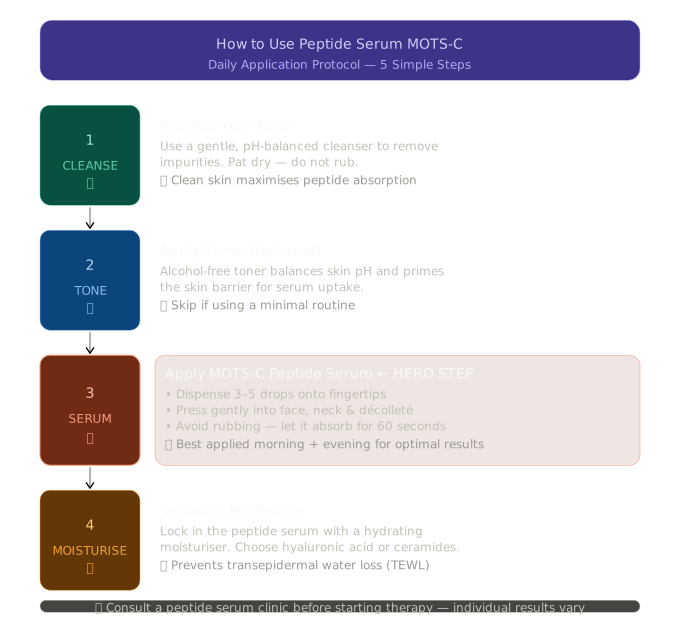 📋 How to Use Peptide Serum MOTS-C: Step-by-Step Protocol
(See the infographic above for a visual walkthrough 👆)
Step 1 — Cleanse 🧼
Use a gentle, sulphate-free cleanser to remove impurities and prepare the skin barrier. Pat completely dry before applying any active ingredient.
Step 2 — Tone (Optional) 💧
An alcohol-free toner with hyaluronic acid or niacinamide balances skin pH and enhances penetration of the peptide serum that follows.
Step 3 — Apply Peptide Serum MOTS-C 🔬 (Hero Step)
- Dispense 3–5 drops onto clean fingertips
- Press gently into the face, neck, and décolleté using upward strokes
- Allow 60 full seconds of absorption — do not rub or rush this step
- Best results: apply morning and evening
💡 Expert Tip: Slightly damp skin (not wet) enhances absorption of aqueous peptide serums by up to 40%, according to dermatological absorption studies.
Step 4 — Moisturise 🫧
Layer a ceramide or hyaluronic acid moisturiser on top to seal the peptide serum and prevent transepidermal water loss (TEWL).
Step 5 — Protect (AM Only) ☀️
In the morning, finish with SPF 30+. UV radiation is one of the primary drivers of mitochondrial DNA damage — counterintuitive to apply a mitochondrial peptide without sun protection.
🏥 Peptide Serum Clinic vs. At-Home Use: Which Is Right for You?
This is one of the most common questions asked by people searching for peptide therapy near me.
At-Home Topical Use
- Suitable for general anti-aging, skin glow, and maintenance
- Lower concentration formulations — safer for unsupervised use
- Results emerge gradually over 8–12 weeks
Peptide Serum Clinic / Therapeutic Use
- Injectable MOTS-C for systemic metabolic and longevity benefits
- Administered under medical supervision
- Recommended for: metabolic syndrome, athletic performance, serious anti-aging protocols
- A peptide serum clinic will typically run baseline bloodwork (fasting glucose, CRP, cortisol) before starting therapy
🩺 Clinical Expert Note: Dr. Sara Gottfried, a Harvard-trained physician and leading voice in precision medicine, has noted that mitochondrial peptides like MOTS-C “represent a new generation of therapeutics targeting the root cause of cellular aging — not just its symptoms.” While this was said in the context of functional medicine, it encapsulates why MOTS-C has earned serious attention across disciplines.
💡 Key Insights: Stacking MOTS-C With Other Peptides
Experienced practitioners at peptide therapy clinics often combine MOTS-C with complementary peptides for a synergistic effect:
- MOTS-C + Humanin: Both are mitochondrial-derived peptides — together they offer broader mitochondrial protection
- MOTS-C + Epitalon: Epitalon activates telomerase; MOTS-C supports the energy infrastructure for cellular repair — a powerful longevity stack 🧬
- MOTS-C + BPC-157: BPC-157’s tissue repair properties pair well with MOTS-C’s anti-inflammatory action, particularly post-exercise
⚠️ Always stack under the guidance of a qualified professional. Peptide interactions, while generally well-tolerated, can vary significantly based on individual health status.
🎯 Conclusion: Is Peptide Serum MOTS-C Worth It?
The answer, for most people serious about cellular health and skin longevity, is a confident yes — with caveats.
Peptide serum MOTS-C is not a miracle cream. It is a precision biological tool that works with your cells’ existing machinery to restore what time, stress, and UV radiation erode. The peer-reviewed science is compelling, the mechanisms are well-understood at the cellular level, and the clinical pipeline is actively expanding.
Whether you access it through a peptide serum clinic for systemic therapy or incorporate a topical peptide serum into your daily routine, the most important step is to start informed. Understand your baseline, set realistic timelines (8–12 weeks minimum), and seek professional guidance — especially for injectable protocols.
The mitochondria are increasingly understood as the pacemakers of aging. MOTS-C speaks their language. 🧬✨
❓ FAQ Schema Section
Q1: What is MOTS-C peptide and what does it do? MOTS-C is a mitochondrial-derived peptide that activates AMPK, the cell’s master metabolic switch. It improves cellular energy production, reduces oxidative stress, lowers inflammation, and supports tissue repair — making it valuable for both metabolic health and skin rejuvenation.
Q2: Can I use peptide serum MOTS-C on my skin every day? Yes. Topical peptide serum MOTS-C is generally well-tolerated for daily use. Most protocols recommend morning and evening application to clean skin, followed by moisturiser and SPF in the morning. Start with once daily and assess skin tolerance over the first two weeks.
Q3: Where can I find peptide therapy near me? Search for licensed functional medicine clinics, longevity centres, or anti-aging practices that specialise in peptide therapy. Always verify that the clinic uses pharmaceutical-grade, third-party tested peptides and that therapy is supervised by a qualified healthcare provider.
Q4: How long does it take to see results from MOTS-C peptide serum? Most users report initial improvements in skin texture and energy within 4–6 weeks of consistent topical use. For systemic injectable protocols through a peptide serum clinic, measurable metabolic improvements (HbA1c, CRP, body composition) are typically tracked at 8–12 weeks.
Q5: Are there any side effects of MOTS-C peptide serum? Topical formulations are generally well-tolerated with minimal reported side effects. Injectable MOTS-C may cause transient site reactions (redness, mild swelling). Individuals with autoimmune conditions, metabolic disorders, or those on immunosuppressants should consult a physician before starting any peptide therapy.
Reviews
There are no reviews yet.