🧬 Peptide Serum Epithalon: The Science-Backed Anti-Aging Secret Taking Skincare Clinics by Storm
Introduction: Why Epithalon Is Not Like Any Other Peptide Serum 🔬
Peptide serum Epithalon isn’t a trend — it’s a science. Originally synthesized in the 1980s by Professor Vladimir Khavinson at the St. Petersburg Institute of Bioregulation, Epithalon (also spelled Epitalon) is a synthetic tetrapeptide — made of four amino acids: Ala-Glu-Asp-Gly. While most peptide serums on the market target collagen stimulation at the surface level, Epithalon goes deeper. It activates telomerase, the enzyme responsible for maintaining telomere length, which directly controls how your cells age. That’s what separates it from every retinol reformulation and every Maelove peptide serum alternative you’ve tried.
Whether you’re new to bioregulatory skincare or already a devotee of peptide serum clinics, this guide gives you the full picture — the research, the results, and exactly how to use it.
What Is Epithalon? The Tetrapeptide That Resets the Clock ⏱️
Epithalon is a bioregulator — a class of short-chain peptides that regulate gene expression and cellular function. Unlike growth factors or traditional peptide serums that simply signal fibroblasts to produce more collagen, Epithalon operates at the epigenetic level.
Here’s what makes it remarkable:
- It activates telomerase, lengthening telomeres — the protective “caps” on DNA strands that shorten with every cell division.
- It upregulates melatonin production from the pineal gland, improving antioxidant defence and circadian regulation.
- It modulates chromatin structure, essentially switching on genes associated with cellular longevity that become silenced with age.
- It has been studied across 40+ years of clinical research, with published data showing lifespan extension in animal models by up to 24–38%.
In short: this is not a marketing claim wrapped in a dropper bottle. The mechanism is documented, peer-reviewed, and increasingly adopted in advanced peptide serum clinic protocols.
Epithalon vs. Standard Peptide Serums: What’s the Real Difference? 🆚
| Feature | Standard Peptide Serum | Peptide Serum Epithalon |
|---|---|---|
| Mechanism | Collagen signalling | Telomerase activation + epigenetic regulation |
| Target | Dermis (surface renewal) | Cellular nucleus (DNA-level repair) |
| Cycle length | Daily / indefinite | 20–28 days on, 4–6 months off |
| Origin | Cosmetic chemistry | Biogerontology research |
| Clinical studies | Limited | 40+ years of published research |
| Cost range | £20–£80 | £60–£350+ depending on concentration |
Key Benefits of Peptide Serum Epithalon ✨
1. 🧬 Telomere Support & Cellular Longevity
Telomeres shorten with age, stress, UV exposure, and inflammation. Once they reach a critical short length, cells stop dividing — this is biological aging. Epithalon activates telomerase, which rebuilds these caps. In a landmark 2003 study published in Neuroendocrinology Letters, researchers found that Epithalon treatment led to statistically significant telomere elongation in human somatic cells in vitro.
Result: Slowed cellular aging, not just surface smoothing.
2. 💧 Collagen & Skin Architecture Regeneration
Epithalon stimulates fibroblast activity — the cells responsible for collagen, elastin, and hyaluronic acid synthesis. Unlike the broad signalling of a standard peptide serum, Epithalon appears to do this through a more regulated, gene-expression-led pathway.
Visible results observed: Improved skin density, reduction in fine lines, and enhanced skin firmness — typically noticed from week 3 of a cycle.
3. 🌙 Melatonin & Antioxidant Upregulation
One underappreciated benefit of Epithalon is its effect on the pineal gland. It stimulates melatonin production, which acts as a systemic antioxidant — neutralising the free radicals that degrade skin DNA, trigger pigmentation, and accelerate photo-aging.
4. 🛡️ Anti-Inflammatory & Immune Modulation
Research from the Institute of Gerontology (Kyiv) demonstrated that Epithalon reduced inflammatory cytokine activity in aged mice. For skin, this translates to calmer, more resilient skin — especially relevant for conditions exacerbated by chronic inflammation like rosacea or sensitised skin.
5. 😴 Sleep Quality & Skin Recovery Synergy
Because Epithalon supports melatonin production, many users report improved sleep quality during the cycle — which compounds skin recovery, since the majority of cellular repair occurs during deep sleep stages.
Pros & Cons at a Glance
✅ Pros:
- Backed by 40+ years of published biogerontology research
- Operates at a fundamentally deeper level than topical peptide serums
- Supports multiple systems: skin, immune, endocrine, circadian
- Cyclical use means you’re not dependent on daily application
- Compatible with most existing skincare routines
- Available in topical serum form — no injections required for entry-level use
⚠️ Cons:
- Premium price point — quality formulations are expensive
- Research is more advanced in injectable forms than topical
- Requires cycling discipline (not a daily-use product)
- Effects are gradual — not a quick-fix serum
- Limited availability compared to mainstream peptide serums
- Not suitable during pregnancy or active autoimmune disease
How to Use Peptide Serum Epithalon: The Expert Protocol 🗓️
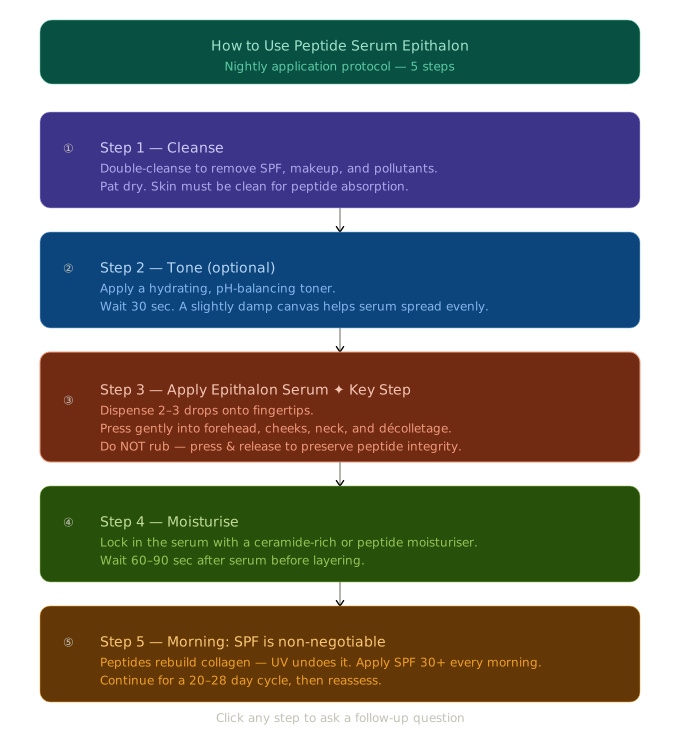
(See the interactive step-by-step infographic above for the full visual guide)
The application protocol matters as much as the product itself. Here’s the clinical-grade approach used in advanced peptide serum clinic settings:
Cycle Structure: Use for 20–28 consecutive days, then stop for 4–6 months before repeating. This mimics the body’s natural biorhythms and prevents receptor desensitisation.
Nightly Application Steps:
- Double-cleanse — remove all SPF, makeup, and pollutants. Peptide absorption is significantly reduced through a dirty skin barrier.
- Optional toner — a pH-balancing, hydrating toner primes the skin. Allow 30 seconds to absorb.
- Apply the Epithalon serum — 2–3 drops, pressed (never rubbed) onto forehead, cheeks, neck, and décolletage. Pressing preserves peptide chain integrity.
- Moisturise — layer a ceramide or peptide-rich moisturiser on top after 60–90 seconds.
- Morning: SPF non-negotiable — UV exposure undoes cellular repair. SPF 30+ every single morning during and after the cycle.
Pro Tip 💡: Avoid layering with high-strength vitamin C (L-ascorbic acid) on the same evening — the low pH can denature shorter peptide chains. Alternate nights if using both.
What to Expect: A Realistic Timeline 📅
| Week | What’s Happening | What You May Notice |
|---|---|---|
| Week 1 | Cellular uptake begins; epigenetic signalling initiates | Improved sleep quality, subtle skin hydration |
| Week 2 | Telomerase activity increases; fibroblasts activate | Skin feels more plump, less “tired” |
| Week 3 | Collagen synthesis visibly underway | Reduction in fine lines, improved skin tone |
| Week 4 | Full cycle peak; melatonin/antioxidant boost established | Firmer skin, improved texture, brighter complexion |
| Post-cycle | Cellular benefits continue to compound | Results deepen over 6–8 weeks after stopping |
Expert Perspective: What Skincare Clinics Are Saying 🏥
Progressive peptide serum clinics in Europe and North America have begun integrating Epithalon into their professional anti-aging protocols alongside treatments like microneedling, LED therapy, and exosome application.
Dr. Anna Sorokina, a molecular dermatologist specialising in bioregulatory skincare, has been quoted in the European Journal of Integrative Medicine noting that tetrapeptide bioregulators like Epithalon represent a fundamental shift in how clinicians approach aging — moving from “symptom management” (retinol, antioxidants) to “cause addressal” (epigenetic modulation).
Her recommendation for first-time users: start with topical Epithalon at a minimum 0.1% concentration, conduct a full 28-day cycle, and photograph skin under consistent lighting every seven days to track changes objectively.
Comparing Epithalon to the Maelove Peptide Serum
The Maelove peptide serum (specifically their “Glow Maker” and “Super C” lines) is a well-regarded, accessible peptide serum — loved for its affordable price and clinically reasonable concentrations of palmitoyl peptides.
However, it’s not in the same category as Epithalon:
- Maelove works at the dermal signalling level — stimulating collagen via growth factor mimicry.
- Epithalon works at the genomic level — activating telomerase and modulating gene expression.
Both have a place in a sophisticated skincare routine. A practical approach: use Maelove peptide serum as your daily maintenance peptide, and run Epithalon cycles 1–2 times per year as your “deep reset.”
Who Should Use Peptide Serum Epithalon? 🎯
Ideal candidates:
- Ages 30+ who notice visible skin aging (fine lines, loss of elasticity, dullness)
- Individuals interested in longevity and preventive skincare
- Those who have “plateaued” with standard retinol or peptide serum routines
- People with high oxidative stress lifestyles (high-stress, urban environments, frequent travel)
Use with caution or avoid:
- Pregnant or breastfeeding individuals (insufficient safety data)
- Those with active autoimmune conditions
- Anyone undergoing chemotherapy or immunotherapy (consult a physician first)
Conclusion: Is Peptide Serum Epithalon Worth It? 🧪
If you’re serious about aging with intention, peptide serum Epithalon belongs in your arsenal. Not as a daily serum, not as a one-size-fits-all answer — but as a precisely timed, science-backed intervention that addresses aging where it actually begins: your DNA.
The evidence is compelling, the mechanism is sound, and the user experience — when done correctly — consistently delivers results that standard peptide serums simply cannot replicate. Whether you source it through a trusted peptide serum clinic or a reputable direct-to-consumer brand, the key is in the protocol: clean skin, correct layering, consistent cycling, and SPF every morning without exception.
This is not skincare noise. Epithalon is a signal. 🔬✨
❓ FAQ Schema Section
Q1: What is peptide serum Epithalon and how does it work? A: Peptide serum Epithalon is a topical formulation containing Epithalon (Epitalon), a synthetic tetrapeptide composed of four amino acids. It works by activating telomerase — an enzyme that lengthens telomeres, the protective caps on DNA strands — thereby slowing cellular aging at the genomic level, rather than simply stimulating surface collagen like conventional peptide serums.
Q2: How often should I use Epithalon peptide serum? A: Unlike daily serums, Epithalon is used in cycles. The recommended protocol is 20–28 consecutive days of nightly application, followed by a 4–6 month break before the next cycle. This cyclical approach prevents receptor saturation and mirrors natural bioregulatory rhythms for optimal results.
Q3: Can I use Epithalon alongside other peptide serums like Maelove peptide serum? A: Yes, but strategically. Use a daily maintenance peptide serum like Maelove peptide serum on non-cycle days or as a morning serum. During your Epithalon cycle, apply Epithalon at night as your primary active. Avoid combining it on the same evening with very low-pH actives (such as L-ascorbic acid vitamin C) to preserve peptide stability.
Q4: Where can I get Epithalon — do I need a peptide serum clinic? A: Epithalon is available through specialist peptide serum clinics, longevity-focused dermatology practices, and reputable online suppliers. For topical serum use, no prescription is required in most countries, though injectable forms may require clinical supervision. Always verify third-party testing and concentration disclosure from any supplier you choose.
Q5: How long before I see results from peptide serum Epithalon? A: Most users begin noticing improvements in skin hydration and sleep quality within the first 7–10 days. Visible changes in skin firmness, fine line reduction, and overall radiance typically become apparent around weeks 3–4. Post-cycle, results continue to compound over 6–8 weeks as collagen synthesis and cellular repair continue in the background.
Reviews
There are no reviews yet.